Detection in buildings that fight back
Industrial environments punish detection: dust blinds chambers, cold stops batteries, height delays smoke arrival, and ventilation dilutes it. The technology has to be chosen for the environment rather than for the catalogue.
Environment first, technology second
| Environment | Why ordinary point smoke detection struggles | Better options |
|---|---|---|
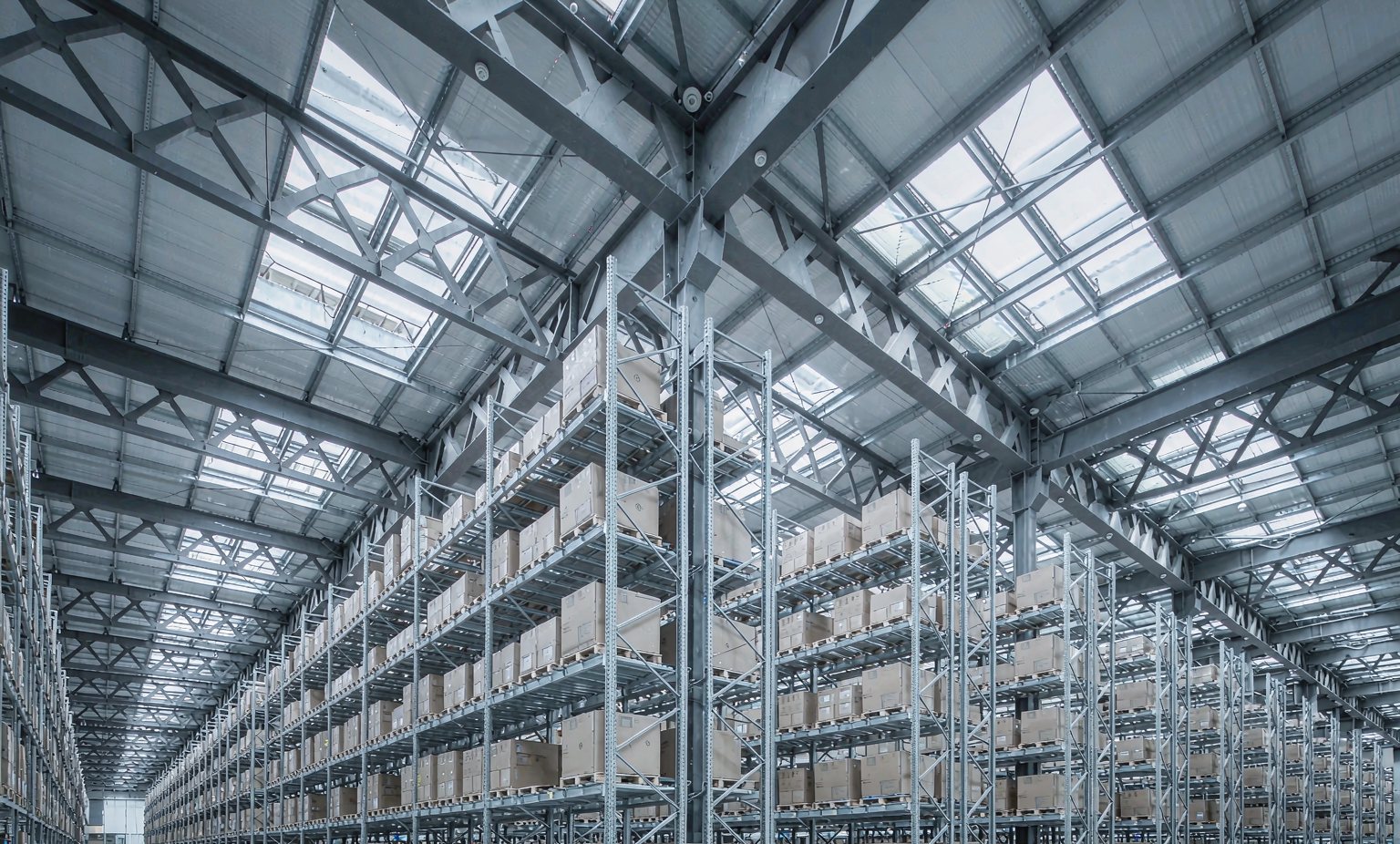
| High, open warehouse with racking | Smoke has metres of travel before it reaches a ceiling detector, and ceiling-level stratification can hold it away entirely | Beam detection across the void; aspirating detection; in-rack detection at the top of the storage |
| Dusty production or woodworking | Dust permanently contaminates optical chambers and produces constant nuisance alarms | Heat detection where the risk is thermal; aspirating detection with appropriate filtration; routine cleaning regimes |
| Cold store and freezer | Batteries fail, plastics embrittle, condensation forms on entry, and rated ranges are exceeded | Heat detection and detectors rated for low temperature; aspirating detection with heated sampling pipework |
| Data hall, switch room, clean room | A fire is small and value is concentrated; smoke dilution by cooling airflow delays point detection past the point of usefulness | Very early warning aspirating detection, with airflow-aware sampling point placement |
| Hazardous area with flammable vapour | Standard devices are not safe to install | Intrinsically safe or explosion-protected detection, installed under a hazardous-area classification study |
| Loading bays and vehicle areas | Diesel exhaust and outdoor air produce nuisance alarms | Heat detection, with attention to thermal gradients and door openings |
| Waste, recycling and battery storage | Deep-seated smouldering, heat release and toxic smoke; detection may not be the only protection needed | Early gas or aspirating detection plus thermal imaging and suppression, designed together |
| Hangar, atria, large void | Height and volume delay detection beyond acceptable limits | Beam and aspirating detection designed for the geometry, with the escape strategy resolved |
Why height and air movement are the real problem
- Stratification — in a tall space the air can form stable layers. Hot smoke may never reach the ceiling, drifting sideways under a thermal barrier where no ceiling detector will ever see it.
- Dilution — mechanical ventilation and large volumes reduce the particle concentration reaching a sensing element. A detector that works in a 2.7 m room may see nothing in a 12 m hall.
- Delay — the time for smoke to travel from the seat of the fire to the ceiling grows with height. In a high space, ceiling-level detection may be minutes late, which is why early-warning technologies earn their cost.
- Access — a detector that cannot be reached without a scissor lift will not be tested as often as it should be, and every maintenance regime collapses when access is expensive.
Detection is one layer, not the whole strategy
In industrial risk, detection works alongside compartmentation, suppression, process shutdown, staff training and insurance requirements. A detection design that is not coordinated with those layers will be either ineffective or uninsurable — which is why industrial work starts with a risk assessment, not with a detector catalogue.
Practical design rules for large spaces
- Model the smoke path, not just the roomWhere will a fire start, how will the plume rise, what will the air movement do to it, and where will it first accumulate? Detection goes where the smoke goes.
- Match the technology to the ceiling heightPoint detection for ordinary heights; beam detection for long, high, unobstructed voids; aspirating detection where very early warning is required. Above roughly 4.5 m, question point detection seriously.
- Protect inside the rackingIn high-bay storage, in-rack detection at the top of the racking catches a fire that would otherwise grow well below the ceiling.
- Deal with the environment before the detectorIf a chamber will ingest dust, plan cleaning intervals or use a technology that tolerates it. If a room will freeze, use a device rated for the cold.
- Design the maintenance access at the same timeCatwalks, test points, remote indicators and sampling pipe access points are part of the design, not an afterthought.
- Write the isolation procedureEvery process shutdown, hot work permit and maintenance window needs a documented detection isolation and restoration step, with a named owner and a date.
Industrial project to specify?
Send the environment, the volume, the ceiling height and the process risk and the engineering team will recommend a sensing strategy with the reasoning attached.