How a smoke alarm actually works
Every domestic smoke alarm is a small chamber, a light source or a radioactive source, a sensor and a decision. The differences between technologies decide what sets them off — and what does not.
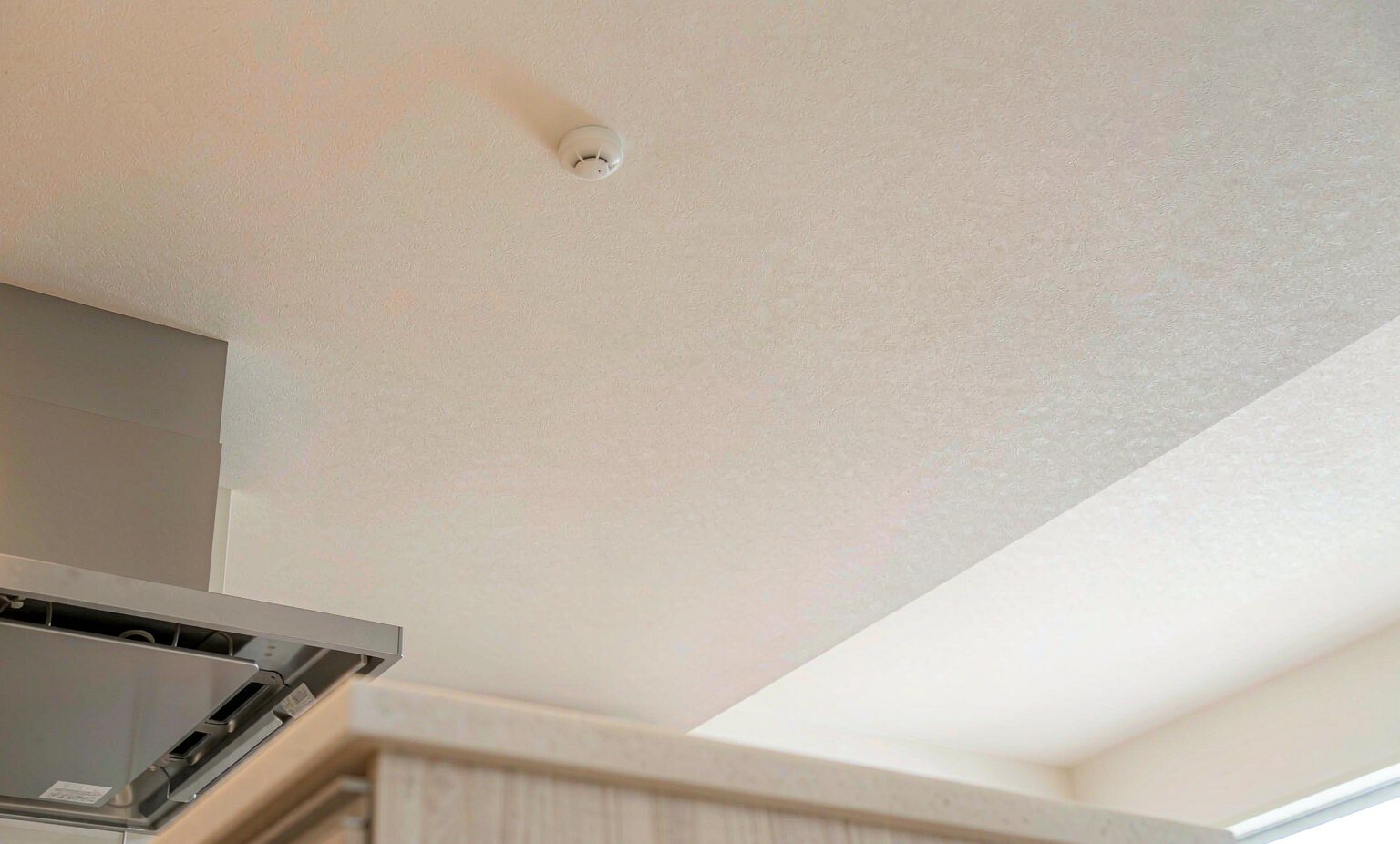
The five sensing principles, in one minute
| Technology | What it senses | Best for | Weakest at |
|---|---|---|---|
| Optical / photoelectric | Light scattered by smoke particles | Smouldering fires: upholstery, mattresses, PVC cable, paper | Fast clean-burning flames, very black smoke |
| Ionisation | Smoke particles reducing a small ion current | Fast flaming fires: paper, wood, flammable liquid | Slow smoulder; notorious for cooking nuisance alarms |
| Dual / multi-sensor | Both, compared by firmware | Living spaces, hallways, bedrooms where one sensor alone may miss | Nothing specific — costs and consumes slightly more power |
| Heat (thermal) | Temperature above a threshold, or a rapid rise | Kitchens, garages, dusty and steamy rooms where smoke sensing misbehaves | Slow smouldering fires that never reach the threshold |
| Electrochemical CO | Carbon monoxide as a gas | Rooms with fuel-burning appliances or attached garages | Smoke — a CO alarm is not a smoke alarm |
Optical (photoelectric) detection
Inside a photoelectric chamber an infrared LED and a photodiode are arranged so that, in clean air, light from the LED never reaches the sensor — a physical light trap. Smoke entering the chamber scatters that light, and the fraction that lands on the photodiode rises. When the received signal crosses a threshold, the alarm sounds.
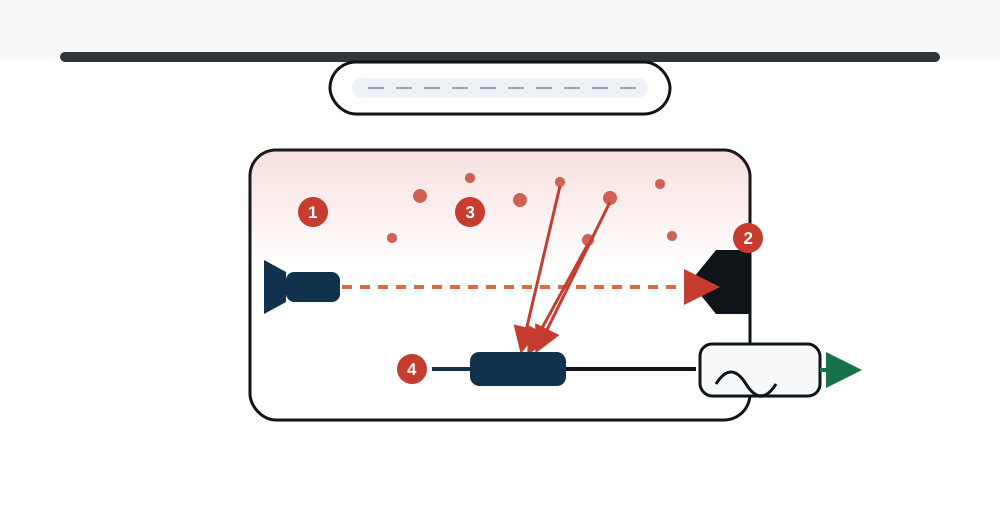
- Best response to visible smouldering smoke — which is what most domestic fires produce at the moment they start.
- Largely blind to very dark smoke and to fires that burn clean and hot, unless the smoke column is dense enough to scatter enough light.
- Relatively immune to cooking particles compared with ionisation, so it is the default choice for bedrooms, hallways and living rooms.
- Dust and insect ingress raises the baseline reading over the years, which is one reason a 10-year replacement interval exists.
Ionisation detection
An ionisation chamber holds a tiny americium-241 source that ionises the air between two electrodes, so a small current flows continuously. Aerosol from a fire changes the mobility of those ions and the current falls. The electronics register the drop and sound the alarm.
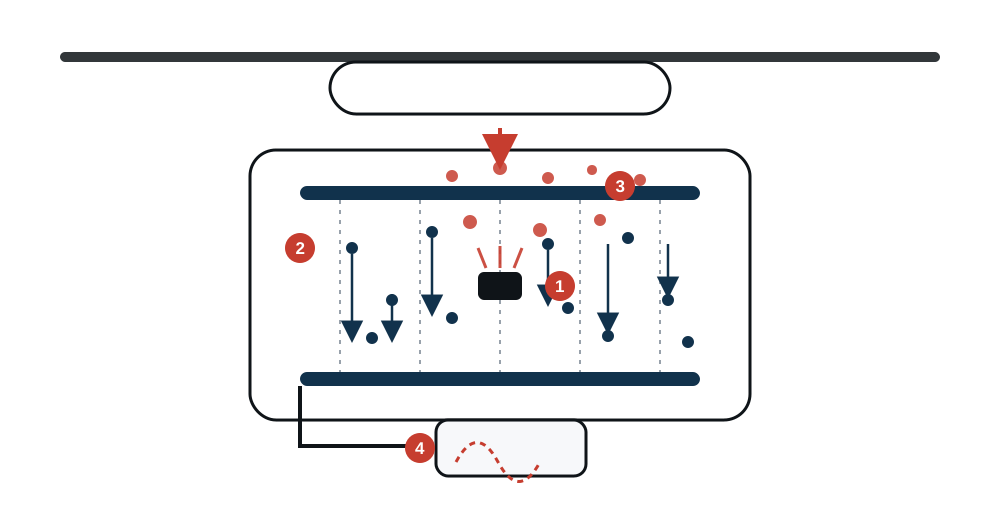
- Historically the fastest responder to open flaming fires, where particles are numerous but tiny and often invisible.
- Sensitive to particle concentrations so low that you cannot see them, which is why it was specified near kitchens and stairwells for decades.
- Draws more standby current than optical sensing in most designs, though the difference has narrowed sharply.
- Prone to nuisance alarms from cooking aerosol, steam and aerosol sprays — the classic cause of a removed battery.
Dual and multi-sensor detection
A dual-sensor alarm carries an optical chamber and an ionisation chamber in one housing, or combines optical detection with a heat element. Firmware weighs the two signals rather than triggering on either alone, which widens the range of fires it catches while suppressing the nuisance sources that would have tripped a single sensor.
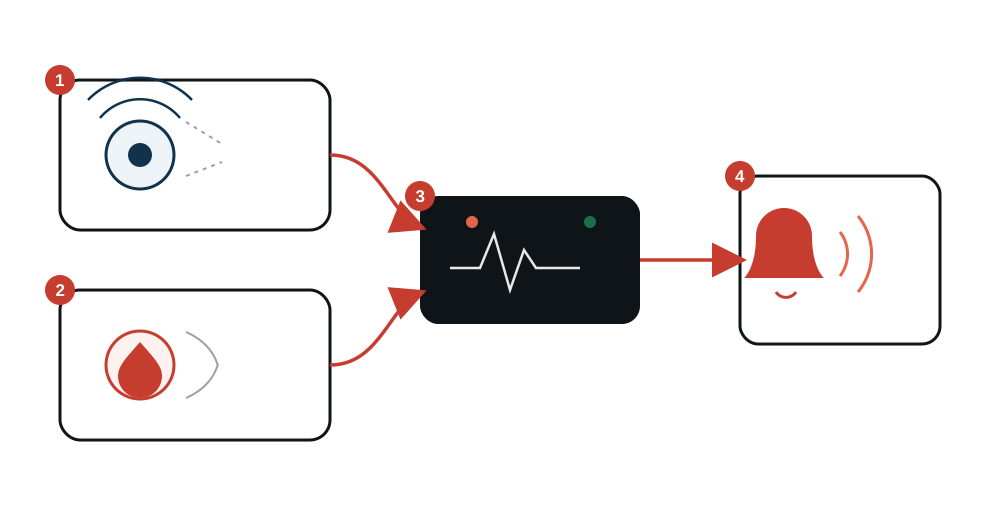
Two alarms can carry an identical chamber and an identical sensor and still behave completely differently, because nuisance discrimination lives in the firmware: the drift compensation, the smoothing window, the required duration above threshold. This is why a well-engineered mid-market alarm can beat a poorly tuned one with a longer component list.
Heat, CO and combination units
Heat detection
A heat detector ignores smoke entirely. It triggers on a fixed temperature — commonly 57 °C or 58 °C for domestic units — or on a rate-of-rise of roughly 8 to 10 °C per minute, or on a combination of both. This is exactly what you want in a kitchen, a garage, a boiler room or a dusty workshop, and exactly what you do not want guarding a bedroom: a smouldering fire can fill a room with lethal smoke well below the trigger temperature.
Carbon monoxide detection
A CO alarm uses an electrochemical cell and follows a completely different standard — EN 50291 or UL 2034 — with alarm thresholds expressed as concentration over time rather than as an instantaneous trigger. It protects against incomplete combustion from boilers, stoves, open fires and blocked flues. It will not warn you about a smoke fire, and a smoke alarm will not warn you about CO. If both risks apply, use a combination device or fit both.
Combination devices
Optical-plus-heat and smoke-plus-CO units exist, and they are convenient — one ceiling hole, one battery, one label. The trade-off is that all sensing elements share one housing, one power budget and one replacement cycle, and the unit is only as good as its weakest channel when it comes to certification scope.

What happens after the sensor reacts
- Signal conditioningThe raw signal is filtered to reject spikes — a single dust particle must not trigger an alarm. Most designs require the threshold to be exceeded for a defined window.
- Drift compensationThe chamber slowly contaminates. Firmware tracks the clean-air baseline and compensates, which is why an old alarm can still pass a manual test button and yet be far less sensitive than when new.
- DecisionAlarm criteria are applied. In dual-sensor units the rule combines channels; in smart units it may also consult historical data stored on the device.
- SoundingThe piezo sounder is driven at high amplitude — at least 85 dB(A) at three metres per EN 14604 and UL 217 — often with a shaped frequency sweep that is easier to hear through a closed door and easier for children and older adults to wake to.
- Interlink broadcastIf the alarm is interlinked, the alarm message is transmitted over the hardwired line or the radio link so every device in the system sounds together.
- Latch and silenceThe alarm latches until the air clears, and the hush function allows a trained person to silence it for roughly ten minutes without removing the battery or disabling the device.
Sensor choice, summarised
- Bedrooms, hallways, landings, living rooms — optical, or a dual-sensor unit. This is where reliable, low-nuisance detection matters most because it protects sleeping people.
- Kitchens — heat detection, or an optical alarm placed well away from the hob; smoke sensing directly above a cooker is a recipe for a removed battery.
- Garages, workshops, dusty stores — heat detection, or a smoke alarm rated for the environment with an appropriate IP rating.
- Anywhere a fuel-burning appliance lives — add CO detection; it is a different hazard with a different sensor and a different standard.
- Large commercial spaces — point detectors on a loop, beam detectors for long voids, or aspirating detection for very early warning; see the commercial and industrial pages.
Next: what the different device types are called
Standalone alarms, mains-powered interlinked systems, wireless mesh, smart devices and addressable detectors — plus the Grade A to F classification used in British and European codes.